Character and gift collections
If you are launching a family of characters, define the parts all variants share and what changes per character. Confirm packaging differences and which prototype should represent the series.
Start with how children will use the product, then match the enclosure, content and interaction to that experience.
Browse product formats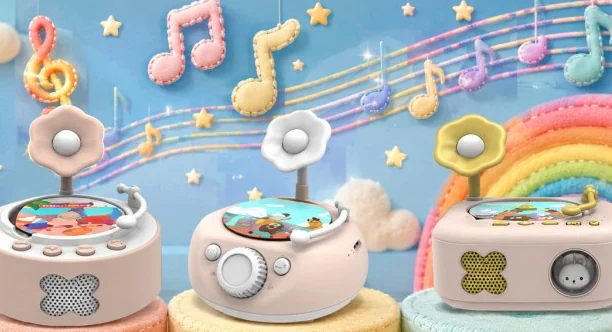
Pick the starting point that matches your brief and bring the questions below to the sample review.
If you are launching a family of characters, define the parts all variants share and what changes per character. Confirm packaging differences and which prototype should represent the series.
Write an example activity and define how children begin, complete it and recover after a mistake. Test spoken instructions and visual controls with users unfamiliar with the prototype.
Decide how users pick a recording and whether playback should resume after interruption. Compare controls, speaker placement and ease of carrying in the intended setting.
Identify the required artwork, logos and packaging references. Establish who approves the first sample and who will review changes to materials or the character design.
The first deliverable should match the decisions your team is ready to make.
Start with the story, illustration rights and the reading or listening moment. Map content to pages, buttons or another agreed control. Review a representative set of recordings before producing the whole audio library. Keep the editorial approval and the physical sample on the same revision.
Start with the identity, essential interaction and target user. Review the enclosure or plush construction with the electronics layout. Separate a functional prototype from the final appearance reference, and agree what each sample will prove before any tooling decision.
Start with the assortment and sales channel. Decide how characters, colors and packaging distinguish the variants. Confirm the information needed for product listings, labels and receiving checks. Compare quantities per variant with the minimums for the product and its packaging.
Start with the learning goal and a short activity sequence. Map the spoken prompt to the child’s action and the expected feedback. Approve each language in the complete interaction, including repeated prompts, corrections and transitions between activities.
Give your supplier enough context to identify the open decisions.
| Your starting point | What to bring | What to review next |
|---|---|---|
| A character collection | Artwork, size range and brand references | Silhouette, fabric, attachment and consistent packaging |
| An audio library | Track list, languages and usage rights | Selection method, loading approach and playback behavior |
| A channel launch | Assortment, target quantities and pack requirements | Variant planning, labeling and the quote assumptions |
| An educational activity | Learning objective, script and action sequence | Controls, prompts, feedback and a language review plan |
Use a short scenario to connect product development with the actual use setting.
Decide whether the user selects content with a control, card or other accessory. Specify what happens when that selection changes mid track. Check the volume, speaker placement and ease of finding the same story again.
Think through carrying, starting, stopping and storing the product. Review controls that could be pressed unintentionally, how the character hangs, and the information a caregiver needs when power or connectivity changes.
Describe how playback is started and stopped and whether another function is part of the routine. Review the control layout in dim light and agree the behavior at the end of the track or after a restart.
Identify the shared construction and the differences in fabric, embroidery and audio. Give each variant a clear identifier so sample records, quotations and packaging files stay matched.
Tell us which experience you want to build and which decisions you have already made.